
Point-of-purchase displays: counter, club and pallet
Store shelves are crowded with similar items that drown out careful branding. We design, develop, fill and deliver the displays that move your product to where the buying decision is made.
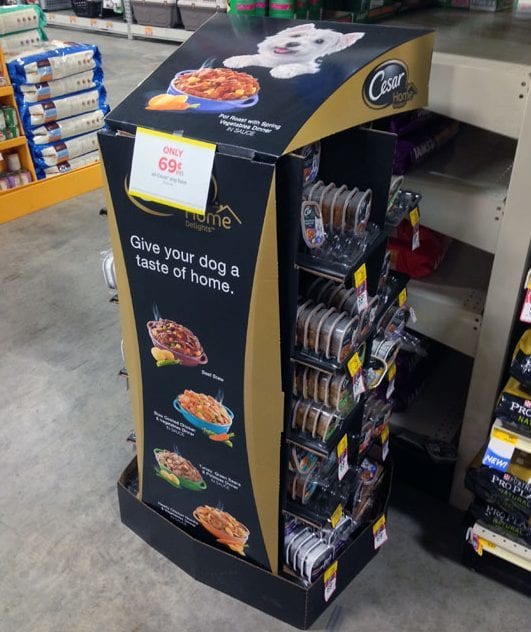
- Formats
- Counter, club tray, pallet, pallet skirt, endcap, freestanding, shelf talker
- Built and filled in
- 200,000 sq ft plant, Gurnee, Illinois
- Ships
- Shelf-ready, filled
- Exit
- To the Shelf
Point of purchase
Help your product stand out in the aisle.
Point-of-purchase (POP) displays are an effective way to grab customers’ attention and ensure the sale of your products. Store shelves are usually crowded with similar items that drown out your careful branding. Help your products stand out with point-of-purchase displays such as counter, club and pallet displays, built by MGA Innovation.
We build the display in the same plant that packs the product that goes in it. The trays are filled, the unit is kitted under one SKU where the program needs it, and the finished display ships shelf-ready, so the display and its contents only have to arrive once.
Why it matters
Why is point of purchase important?
With effective point-of-purchase displays, you can increase your sales without stretching your budget.
For most companies, reaching buyers within the store is the last opportunity to convert interest into a sale. The advertising materials you use with your items, and placing them in the areas where consumers make a purchasing decision, are vital.
Point-of-purchase displays come in a variety of sizes and designs to entice your customer. They are highly cost-efficient, often made of cardboard, and reusable. You may include any of the following on your display:
- Digital or printed designs.
- Unique advertising materials such as banners, signs and images.
Displays are also more versatile than traditional shelf placement. Draw attention to your product with a display in the same aisle, or set up a free-standing display near a complementary item somewhere else in the store to encourage a dual purchase without taking up shelf space.
You can use displays to upgrade your marketing strategy, boosting last-minute sales and brand recognition. MGA can help you create the packaging and the arrangement for these exhibits.
For the long-form guide to display formats, placement and planning, read POP Displays 101.
Formats
Basic types of point-of-purchase displays
You’ll find that point-of-purchase displays change dramatically based on your audience, your product and their placement within a store. A few of the formats we build:
Free-standing displays
Free-standing displays give your goods additional flexibility within the store. Your items will be on the shelves, but with a free-standing display you can also put your merchandise in wide aisles with high foot traffic. Another option is to place your product next to complementary purchases: if you sell hummus, a free-standing display in the chip aisle is a quick way to improve impulse purchases.
Endcap displays
Endcaps promote the visibility of your merchandise without customers ever having to walk past your shelf position. Situated at the end of an aisle, they draw the attention of buyers who wouldn’t have been exposed to your brand otherwise.
Club packs
Club packs are used in club stores to promote large-volume products. They tend to be square, made of cardboard, and stackable. For any business looking to expand into club stores, club packs are essential for staying competitive.
Corrugated pallet displays
Corrugated pallet displays combine merchandiser trays with interior support structures. This type of cardboard display is often quite large and is ideal for storing and selling large volumes of product. Unlike club packs, corrugated pallet displays do not have to meet club-store requirements.
Pallet skirts
Pallet skirts are a simpler version of the corrugated pallet display. They wrap around the pallet and give you space to display a large volume of items, but they cannot reach the heights (or provide the spectacle) of a full-size corrugated pallet display.
Shelf talkers
Shelf talkers are small signs that promote your goods on an aisle shelf. Also called hang-tags, they are an inexpensive way to catch a customer’s eye and make your brand stand out within the aisle.
Counter displays
Counter displays are a quick and easy way to separate your brand from competitors. Made of cardboard, they are often small and can be placed on any store counter. Put one near the cash register to encourage impulse buys.
How a display gets built
Envision your display with MGA.
Whether it is a club-store endcap or a counter display, MGA has the knowledge, experience and resources to design, develop, fulfill and deliver your products. Help your brand cut through the noise without cutting through your budget.
Step 1: Design
We start from the store, the product and the placement: which retailer, where in the store the display will stand, and what it has to say. Those answers choose the format.
Step 2: Develop
The structure, the printed or digital graphics, and the trays, shelves or bins that hold the product, built around the format and the volume it has to carry.
Step 3: Fulfill
The display is assembled and filled on the same floor that packs the product. Oversized and unconventional shapes go to hand assembly; multi-item displays are kitted under one SKU.
Step 4: Deliver
Finished displays leave our dock shelf-ready, shipped to the retailer’s routing guide, with no inter-vendor freight between packing and display build.
On the line
The processes behind a display program
| Zone | Process | Formats | Equipment |
|---|---|---|---|
| Production area | Display build and pack-outCounter, club tray and corrugated pallet displays built, filled and shipped shelf-ready. | Counter, club tray, pallet, pallet skirt, endcap, shelf talker | |
| Isolated production area | Hand assemblyGlue gunning, ribbons, price tags, glass and porcelain, gift packs and oversized display pieces — work too intricate for machines. | Fragile, premium and irregular-shape goods | Hand-assembly stations in the isolated production area |
| Production area | KittingSeparate items combined into one unit under one SKU: subscription boxes, promotional kits, sample packs. | Portable custom-built assembly lines |
Examples
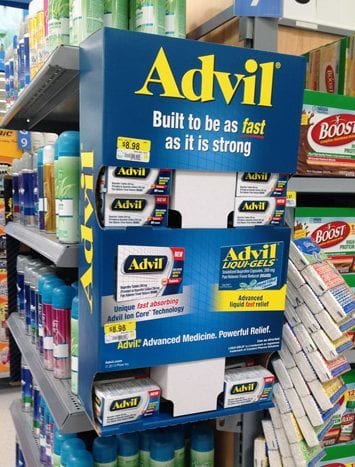
Displays in the aisle
Related capabilities and guides
- POP Displays 101
The long-form guide: POP vs POS, gondolas, dump bins, display cases, and how intent, audience and location decide your format.
- To the Shelf
Retail co-packing, club resets, endcaps and promotional kits, planned as one program.
- Retail co-packing
Shelf-ready packaging for the product that goes into the display.
- Hand assembly
For displays too large, fragile or irregular for a machine line.
- Kitting
Separate items combined into one unit under one SKU.
- Promotional packaging
Branded kits, gift packs and launch pieces.
Tell us about your display.
Talk with us about your ideas for a counter, club or pallet display. Send the retailer, the product and the placement, and a named estimator will reply.